Most people fear the dreaded “retinol purge” or flaky skin when trying to fix fine lines. You want the collagen boost without the redness, and that is exactly where the debate between retinol and bakuchiol begins.
Retinol vs bakuchiol for anti aging depends on your skin sensitivity. Retinol is a gold standard derivative that speeds up cell turnover but can cause irritation. Bakuchiol is a plant-based alternative that offers similar collagen support without the same risk of redness. Use retinol for faster results and bakuchiol if you have sensitive skin.
Best for: All skin types. Use caution if: You are pregnant or have highly reactive, compromised skin barriers.
Retinol Vs Bakuchiol For Anti Aging: Which Is Right For You?
Retinol is a vitamin A derivative that increases collagen production and accelerates cell turnover to reduce fine lines. Bakuchiol is a plant-based extract that mimics these effects without the high risk of redness or peeling.
Skin transformation happens gradually. Retinol usually shows visible changes in 4 to 12 weeks, while bakuchiol often requires a longer commitment of 12 weeks or more for noticeable texture improvement.
| Feature | Retinol | Bakuchiol |
|---|---|---|
| Source | Vitamin A (Synthetic/Animal) | Psoralea corylifolia (Plant) |
| Irritation Risk | High (Peeling, Redness) | Low (Gentle) |
| Sun Sensitivity | Increases sensitivity | No known increase |
| Best For | Oily, Resilient, Mature | Sensitive, Dry, Pregnant |
Application order is critical for safety and efficacy. Always follow this sequence: cleanser, toner, serum (retinol or bakuchiol), moisturizer, and SPF 30+.
Retinol must be applied ONLY at night because sunlight breaks down the molecule. Bakuchiol is stable in sunlight and can be used in morning or evening routines.
Esthetician tip: Always perform a patch test on your inner forearm for 48 hours before applying any new active to your face.
Budget options vary widely. High-end options like Sunday Riley ($85) offer refined textures, but drugstore brands like CeraVe ($16) provide the same core active ingredients.
Active ingredient conflicts can cause chemical burns or breakouts. Never use Vitamin C and retinol at the same time to avoid severe irritation.
For instance, a user with very sensitive skin or rosacea will likely find retinol too aggressive. These individuals should start with bakuchiol to avoid damaging the skin barrier.
Identifying Your Skin Sensitivity Level
Understanding your skin’s sensitivity is crucial before choosing between retinol and bakuchiol for anti-aging. Your skin barrier health directly determines how well you can tolerate potent active ingredients and whether you should opt for the stronger retinol or the gentler bakuchiol alternative.
A compromised skin barrier often presents with visible signs that indicate sensitivity to active ingredients. These include persistent redness, excessive dryness, flakiness, stinging sensations, and heightened reactivity to products that previously didn’t cause issues.
Self-assessing your skin’s current condition helps determine if your skin can handle retinol’s potency or if you need to start with bakuchiol. Consider how your skin reacts to new products and environmental stressors, as this insight guides your choice between these two anti-aging ingredients.
Determining Your Skin’s Tolerance
To assess your skin’s tolerance for active ingredients like retinol, perform a patch test. Apply a small amount of product to a discrete area like behind your ear or on your inner arm for 3-5 days before using it on your face.
Start with a lower concentration of any active ingredient and gradually increase frequency as your skin adapts. If you experience significant irritation, redness, or peeling, your skin may need the gentler approach of bakuchiol before attempting retinol.
| Skin Sensitivity Level | Recommended Starting Product | Application Frequency |
|---|---|---|
| Low sensitivity (resilient skin) | Retinol 0.3-0.5% | 2-3 times weekly |
| Moderate sensitivity (occasional reactions) | Bakuchiol or Retinol 0.1-0.3% | 2-3 times weekly |
| High sensitivity (frequently reactive) | Bakuchiol only | 2 times weekly initially |
“Dermatologist tip: Even if you have resilient skin, always introduce new active ingredients during your evening routine and allow 30 minutes after cleansing before application to minimize irritation.”
Remember that seasonal changes, stress levels, and hormonal fluctuations can affect your skin’s sensitivity. What works during one season might need adjustment during another, making regular assessment of your skin barrier essential for maintaining the right balance between efficacy and comfort.
Comparing Retinol And Bakuchiol Ingredients
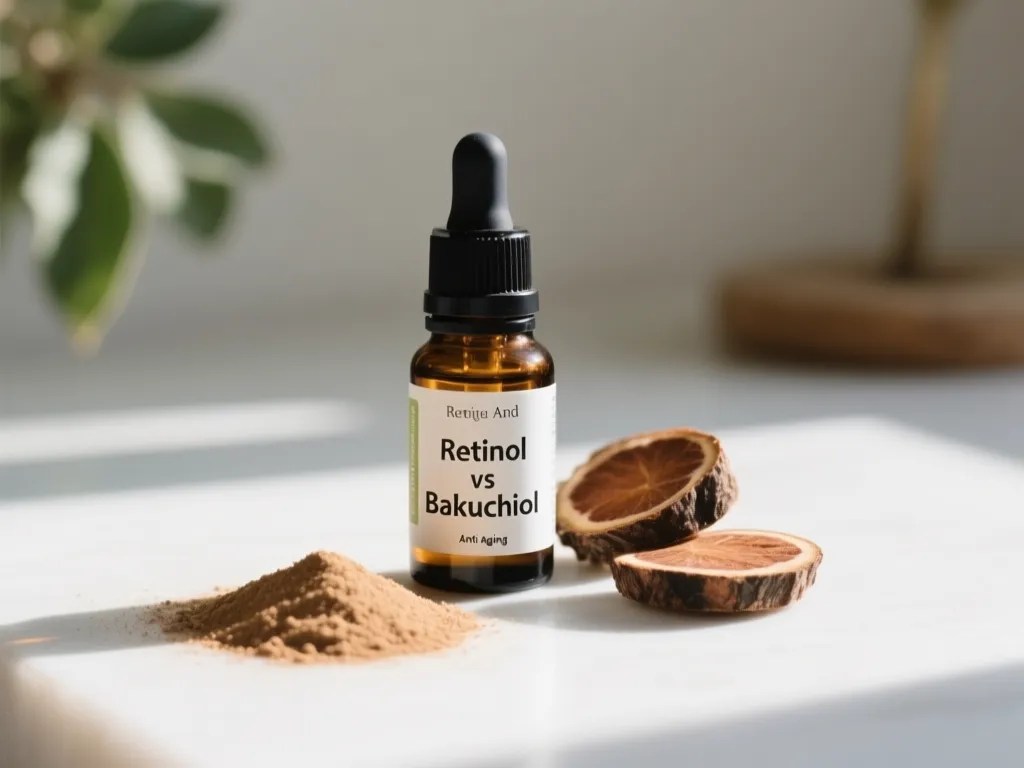
Retinol functions as a vitamin A derivative that converts into retinoic acid to accelerate cellular turnover and stimulate collagen production. Bakuchiol operates as a plant-derived antioxidant that mimics some retinoid pathways without the structural similarity to vitamin A, offering a gentler profile for sensitive skin types.
Clinical data indicates that while both ingredients reduce the appearance of fine lines and improve skin texture, they reach these goals through different biological speeds. Retinol is the gold standard for aggressive anti-aging because it penetrates deeply to alter gene expression, whereas bakuchiol provides a soothing, botanical alternative that avoids the common side effects of flaking, redness, and dryness.
Performance Comparison Metrics
| Feature | Retinol | Bakuchiol |
|---|---|---|
| Primary Action | Cellular turnover | Antioxidant/Soothing |
| Irritation Potential | High | Low |
| Sun Sensitivity | Increases sensitivity | Minimal impact |
| Best For | Resilient skin types | Sensitive or dry skin |
For instance, individuals with acne-prone skin often see faster results with retinol, as it prevents pore clogging effectively. Those with rosacea or eczema often find bakuchiol is the only way to incorporate an anti-aging active into their routine without triggering a flare-up.
Dermatologist tip: Always perform a patch test on the inner arm for 48 hours before applying either ingredient to your face, especially if you have a history of contact dermatitis.
Success with these ingredients requires different approaches to your daily schedule. Retinol breaks down under UV light, so you must restrict its use to your evening routine. Bakuchiol is photostable, meaning it can be applied in the morning or evening without the same risk of degradation or increased sun sensitivity.
Expect to see visible improvements in skin tone and fine lines within 4 to 12 weeks for retinol, while bakuchiol may require 12 weeks or more of consistent use. Regardless of the choice, SPF 30+ remains the most critical step in any anti-aging regimen, as unprotected sun exposure undoes the benefits these ingredients provide.
Optimizing Your Evening Skincare Routine
Effective application of these active ingredients requires a consistent, low-and-slow approach to minimize barrier disruption. Beginners should introduce these compounds only two or three nights per week to monitor for redness, flaking, or stinging.
The Sandwich Method For Sensitive Skin
The “sandwich” technique creates a buffer between your skin and the active ingredient, which significantly reduces the risk of irritation. This method works well for all skin types, especially those with dry or reactive complexions.
Dermatologist tip: Always patch test new formulas on the inner forearm for 48 hours before applying them to your face.
Frequency And Advancement Guidelines
Consistency matters more than concentration when treating signs of aging. You can move from beginner to advanced usage as your skin develops tolerance, but avoid rushing the process.
| Experience Level | Frequency | Goal |
|---|---|---|
| Beginner | 2 nights per week | Establish baseline tolerance |
| Intermediate | Every other night | Increase cellular turnover |
| Advanced | Nightly usage | Maintain long-term skin health |
Advanced users who tolerate active ingredients well may eventually apply them directly to clean, dry skin after cleansing. This increases potency but carries a higher risk of sensitivity. If you notice any tightness or visible peeling, return to the sandwich method immediately to restore your moisture barrier. Regardless of your experience level, never combine these ingredients with strong acids like glycolic or salicylic acid in the same session, as this often leads to chemical burns.
Avoiding Common Retinol And Bakuchiol Mistakes

Over-application triggers barrier damage, which leads to redness, flaking, and sensitivity regardless of the strength of the active ingredient. Most users apply far too much product, thinking that more serum creates faster results, but the skin only absorbs a limited amount of these potent molecules at one time.
For instance, a pea-sized amount is sufficient for the entire face. If your skin feels tight or stings upon application of your moisturizer, you have likely compromised your lipid barrier through excessive use or layering incompatible actives.
The Danger Of Over-exfoliation
Combining these anti-aging actives with physical scrubs or high-strength chemical peels causes micro-tears and chronic inflammation. Retinol and bakuchiol increase cell turnover on their own, so adding AHAs like glycolic acid or BHAs like salicylic acid in the same routine often results in raw, reactive skin.
Dermatologist tip: If you use a retinoid or bakuchiol at night, skip your exfoliating acids entirely. Reserve those treatments for a separate evening or morning session if your skin tolerance allows.
Sun Protection Essentials
SPF 30+ is non-negotiable because retinol can increase the skin’s sensitivity to ultraviolet light. Bakuchiol is generally photostable and does not have the same known effect, but daily sun protection helps prevent hyperpigmentation and protects the benefits of any anti-aging routine.
| Mistake | Consequence | Correction |
|---|---|---|
| Daily Exfoliation | Barrier disruption | Limit acids to 1-2 times weekly |
| Ignoring SPF | Dark spots | Apply broad-spectrum SPF every morning |
| Layering Actives | Chemical burns | Use Vitamin C in AM, retinol in PM |
Consistent, low-intensity usage always outperforms aggressive application in the pursuit of long-term skin health.
Navigating Drugstore Vs Luxury Options
Effective anti-aging formulations exist at every price point, though the difference often lies in the delivery system, texture, and supplemental soothing ingredients. Drugstore products provide reliable access to active molecules, whereas luxury brands prioritize the sensory experience and stability of complex formulas.
Budget-friendly Selections
Drugstore options provide high value by focusing on the active ingredient without added costs for complex emulsifiers or heavy fragrance. These products work well for most skin types, including oily and combination skin, provided you patch test near the jawline before full facial application.
Premium Performance Formulations
Luxury products often contain advanced stabilization technology that prevents the active ingredient from degrading as quickly when exposed to light or air. These formulations frequently incorporate calming botanicals, peptides, or growth factors to mitigate potential irritation while enhancing the overall anti-aging effect.
| Product | Category | Key Ingredient | Best For |
|---|---|---|---|
| SkinCeuticals Retinol 0.3 | Luxury | Pure Retinol | Dry or mature skin |
| Ole Henriksen Glow Cycle | Luxury | Bakuchiol | Sensitive skin |
| Neutrogena Rapid Wrinkle Repair | Drugstore | Retinol | Oily or combination skin |
Dermatologist tip: Always apply these treatments at night, as the sun breaks down active compounds like retinol, and never combine them with Vitamin C in the same application window to avoid potential sensitivity.
Consistency matters more than the price tag when it comes to results. A simple, affordable routine followed every evening will outperform an expensive product used sporadically. Monitor your skin for redness or peeling, and scale back frequency if irritation occurs during the first 4 to 6 weeks of use.
Expert Tips For Lasting Anti-aging Results
Visible improvements in skin texture and fine lines typically require 12 to 24 weeks of consistent use to appear. Patience is the most critical factor when introducing these actives into a routine.
The Low And Slow Method
Active ingredients should be introduced gradually to avoid irritation. For retinol, start with two nights a week for two weeks, then move to every other night as your skin builds tolerance.
For instance, a person with sensitive skin can use the “sandwich method.” This involves applying a layer of moisturizer, then the active, then another layer of moisturizer to buffer the strength.
Pairing Your Actives
Certain ingredients support the skin barrier and reduce dryness. Hyaluronic acid and ceramides are ideal choices for all skin types when using strong actives.
| Item | Best Pairing | Notes |
|---|---|---|
| Retinol | Ceramides | Reduces peeling and dryness |
| Bakuchiol | Vitamin C | Safe for daytime use |
| Both Actives | Hyaluronic Acid | Plumps skin and hydrates |
Professional tip: Apply products from thinnest to thickest consistency to ensure each layer absorbs properly.
- Morning Routine: Cleanser → Vitamin C → Moisturizer → SPF 30+
Quick Summary
Choosing between retinol and bakuchiol depends primarily on your skin sensitivity and specific pregnancy status. Retinol is a vitamin A derivative that accelerates cell turnover for faster results, typically showing texture changes within 12 weeks, though it carries a high risk of irritation and purging. Bakuchiol serves as a plant based alternative derived from Psoralea corylifolia that provides similar collagen support. Because it is much gentler on the skin, it is the preferred choice for those who are pregnant, nursing, or have a compromised skin barrier that reacts poorly to stronger synthetic actives.
Effective application requires patience and careful timing for both ingredients. You should start by using these products only two nights per week to monitor for reactions and always pair them with an SPF 30 or higher during the day. While retinol is strictly a nighttime treatment because sunlight degrades the molecule, bakuchiol remains stable in sunlight for flexible usage. Understanding your unique skin tolerance is the most important step for long term success.
| Feature | Retinol | Bakuchiol |
|---|---|---|
| Primary Source | Vitamin A | Plant Extract |
| Irritation Risk | High | Low |
| Sun Stability | Low | High |
| Best For | Resilient Skin | Sensitive/Pregnant |
Beauty Routine Cheat Sheet
Expected Timeline For Results
Retinol typically produces visible improvements in texture within 4 to 12 weeks. Bakuchiol usually requires a longer commitment of 12 weeks or more to achieve comparable results.
Frequently Asked Questions
How Long Does It Take To See Results From Retinol Or Bakuchiol?
You should expect to see visible improvements in skin texture and fine lines after at least 12 weeks of consistent use. Patience is key because these ingredients work by encouraging cell turnover, which is a slow biological process.
Can I Use Retinol Or Bakuchiol If I Have Sensitive Or Acne-prone Skin?
Bakuchiol is generally better for sensitive skin as it is a plant-based alternative that does not cause the same irritation as traditional retinoids. If you have acne-prone skin, retinol is clinically proven to be more effective at clearing pores, but you must start with a low concentration to avoid a damaged moisture barrier.
What Is The Difference Between Retinol And Bakuchiol?
Retinol is a vitamin A derivative that speeds up cell turnover, while bakuchiol is a botanical extract that mimics some retinol-like effects without the harsh side effects. The main difference is that retinol is significantly more potent for deep wrinkles, whereas bakuchiol is a gentler, stable option for those who cannot tolerate vitamin A.
What Is The Correct Order To Apply These Products In My Routine?
You should always apply your treatment after cleansing and toning, but before your heavier moisturizer. As a rule of thumb, apply products from thinnest to thickest consistency to ensure proper absorption into the skin.
Is The Expensive Version Of Retinol Worth It Compared To The Drugstore Version?
You do not need to spend a fortune to get results because many drugstore brands use the same effective, stabilized retinol molecules found in luxury products. The higher price tag on premium items often pays for elegant packaging, added soothing botanicals, or proprietary delivery systems rather than the active ingredient itself.