Nothing beats the taste of a sun-warmed tomato plucked straight from your own patio. You do not need an expansive backyard or rows of tilled earth to harvest a massive crop, just a sunny corner and the right pot. I have spent nearly two decades refining my container methods, and a single well-tended bucket can keep your kitchen stocked all summer long.
Container-grown tomatoes require a minimum 5-gallon pot for determinate plants (10-15 gallons for indeterminate), high-quality potting mix, and 6 to 8 hours of direct sun daily. Plants need consistent moisture to prevent blossom end rot, so check soil daily during the heat of summer. This is an intermediate difficulty project suitable for all USDA zones.
| Sun Needs | 6-8 hours daily |
| Water | Keep soil evenly moist |
| Soil pH | 6.0 to 6.8 |
| USDA Zones | All (seasonal) |
| Difficulty | Intermediate |
| Time to Harvest | 60-90 days |
How To Grow Tomatoes In Containers Successfully
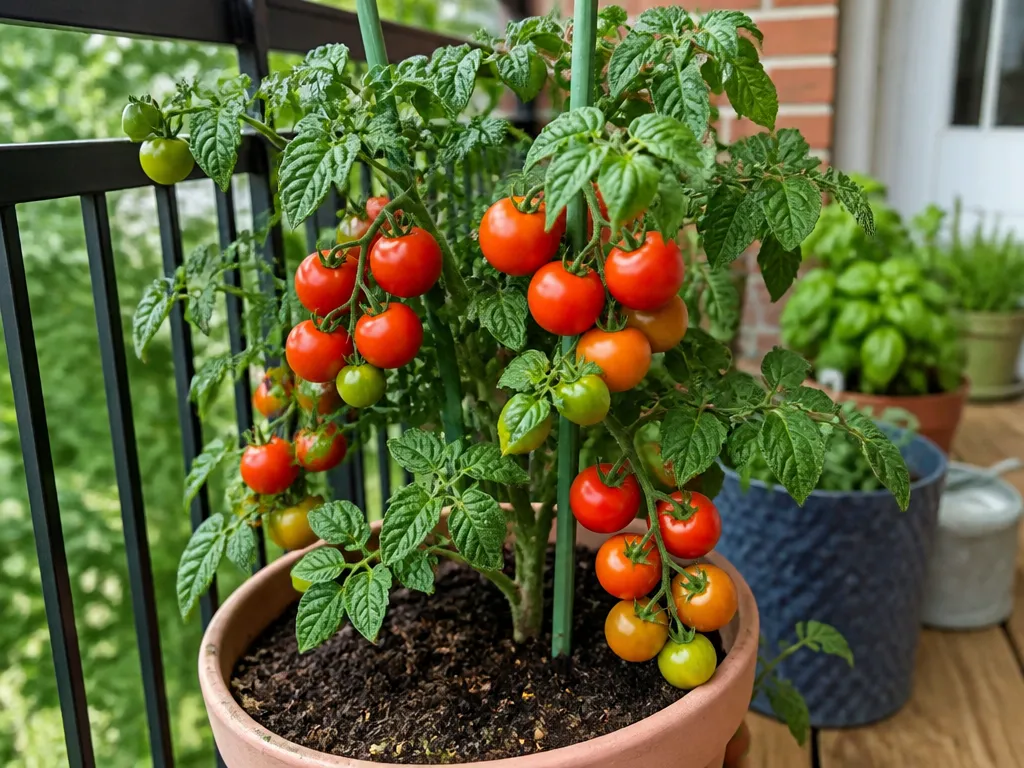
Determinate tomato varieties stop growing once they reach a specific height and produce their entire crop within a concentrated window of four to six weeks. Indeterminate varieties continue to grow, bloom, and set fruit until the first frost, requiring consistent vertical support and regular pruning to thrive in smaller spaces.
Selecting The Right Variety
Choosing between these two growth habits dictates how you manage your limited space. Determinate plants are ideal for smaller patios or balconies because they remain compact and manageable without excessive staking. Indeterminate plants provide a steady, season-long harvest but demand more attention to pruning and heavy-duty structural support.
Consider these popular cultivars for container gardening: Bush Early Girl, Patio Princess, and Tiny Tim.
Harvest Expectations
Harvest timelines depend heavily on the maturity date listed on the seed packet or plant tag. Early-season varieties can provide ripe fruit in as little as 55 days, while larger beefsteak types often require 80 to 90 days of consistent warmth. You should expect the most production during the peak heat of mid-summer.
| Variety Type | Harvest Window | Space Requirement |
|---|---|---|
| Determinate | Concentrated (4-6 weeks) | Small (5-gallon container) |
| Indeterminate | Extended (Until frost) | Large (10-15 gallon container) |
Plan your planting schedule by counting backward from your local first frost date to ensure the plant has enough time to mature. Starting your seeds indoors 6 to 8 weeks before the last expected frost gives your tomatoes a head start on the season. Always wait until night temperatures remain consistently above 50 degrees Fahrenheit before moving your containers into their permanent outdoor location.
Ideal Container Growing Conditions
Tomato plants require a minimum of 6 to 8 hours of direct, unfiltered sunlight each day to produce a viable harvest. Inadequate light results in leggy, weak stems and minimal fruit set regardless of how well you fertilize the plant.
Temperature management is the next critical factor for success. Tomatoes thrive when daytime temperatures range between 70 and 85 degrees Fahrenheit, and nighttime temperatures stay above 55 degrees Fahrenheit. If temperatures climb consistently above 90 degrees or drop below 50 degrees, the blossoms often fail to pollinate and drop off the vine.
Soil Chemistry And Environment
Soil pH levels must remain within a specific range to ensure the plant can absorb essential nutrients. Tomatoes prefer slightly acidic soil with a pH between 6.0 and 6.8. If your soil pH falls outside this range, the plant may suffer from nutrient lockout, leading to yellowing leaves or stunted growth even when fertilizer is present.
The following table outlines the key environmental benchmarks necessary for healthy container-grown plants:
| Condition | Requirement |
|---|---|
| Sunlight | 6-8 hours direct sun |
| Day Temperature | 70-85 degrees Fahrenheit |
| Night Temperature | Above 55 degrees Fahrenheit |
| Soil pH | 6.0-6.8 |
Water requirements shift depending on the stage of growth and the size of your container. During peak summer heat, check your pots twice daily. A mature plant in a 5-gallon container typically needs 1 to 2 gallons of water per day to maintain consistent moisture without drowning the root system.
Environmental stress often manifests through specific physical symptoms, such as wilting or leaf discoloration.
Right Container And Soil Selection
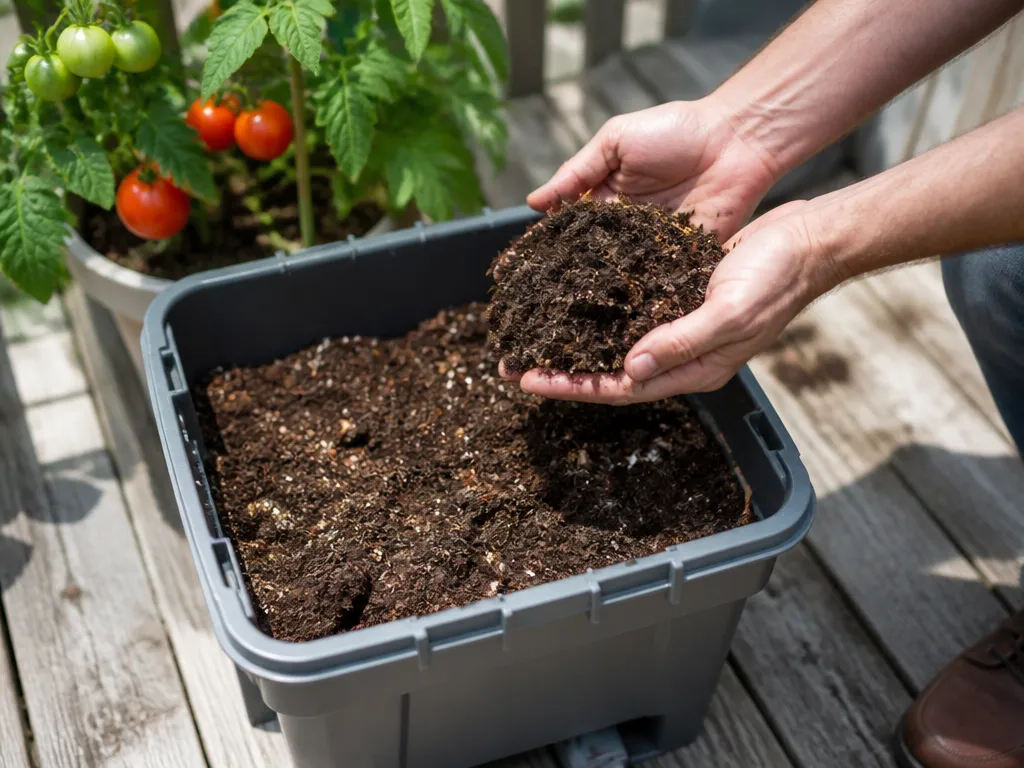
Determinate tomato varieties require a minimum of 5 gallons of space, while indeterminate types need 10 to 15 gallons to prevent root binding. Smaller pots lead to stunted growth and lower fruit yields.
Choosing The Right Pot Size
Pot volume determines how much water and nutrients the roots can access. These plants require full sun (6-8 hours direct sunlight daily) and are typically grown as annuals in USDA Zones 3-11.
| Tomato Type | Minimum Volume | Growth Habit |
|---|---|---|
| Determinate (Bush) | 5 Gallons | Compact, limited height |
| Indeterminate (Vining) | 10-15 Gallons | Continuous growth, tall |
Fabric pots are a strong choice because they air-prune the roots. This prevents the roots from circling the pot and becoming root-bound.
Soil Composition And Drainage
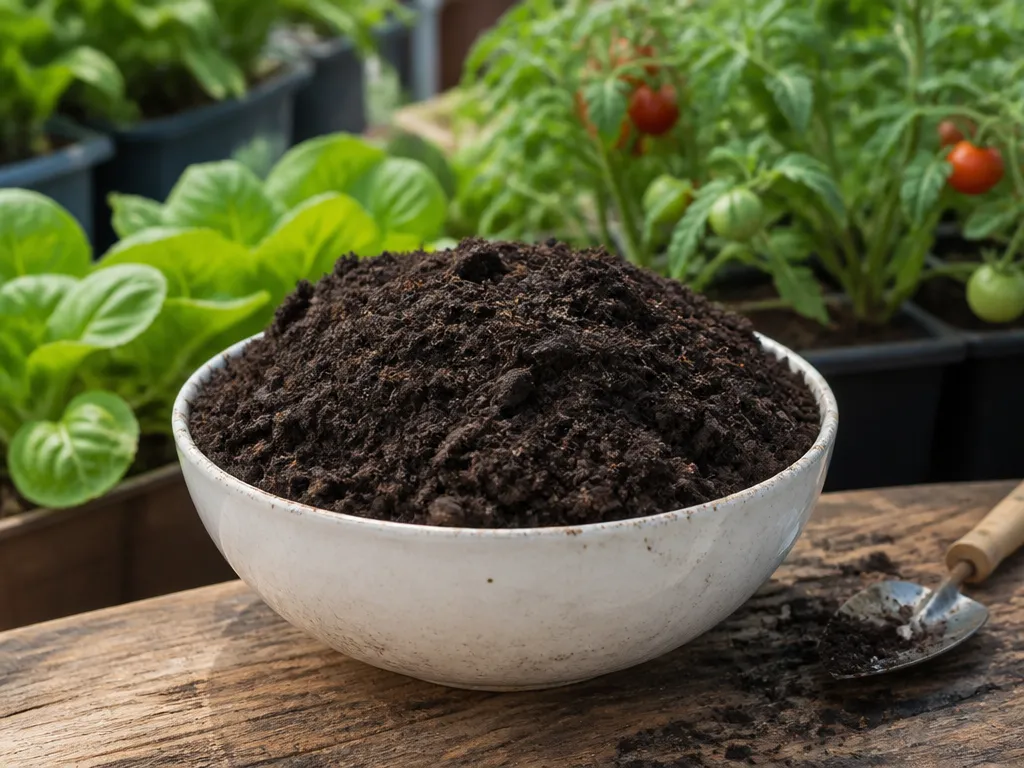
Potting medium must be soil-less and porous to allow oxygen to reach the roots. A mix of peat moss or coconut coir, perlite, and organic compost creates the ideal structure.
Garden soil is too heavy for containers. It compacts quickly, kills root hairs, and often carries soil-borne pathogens that thrive in stagnant pot environments.
Tomato plants prefer a slightly acidic soil pH between 6.0 and 6.8. Porous soil helps maintain consistent moisture without drowning the roots.
A pot without adequate drainage holes will trap salt from fertilizers, causing root burn and yellowing leaves.
Planting And Support Strategies
Deep planting encourages the development of adventitious roots along the buried stem, which significantly improves the stability and nutrient intake of container-grown plants. Tomatoes possess the unique ability to sprout roots from any part of the stem that touches moist soil, turning a single main root into a robust, multi-layered anchor system.
Structural Support Systems
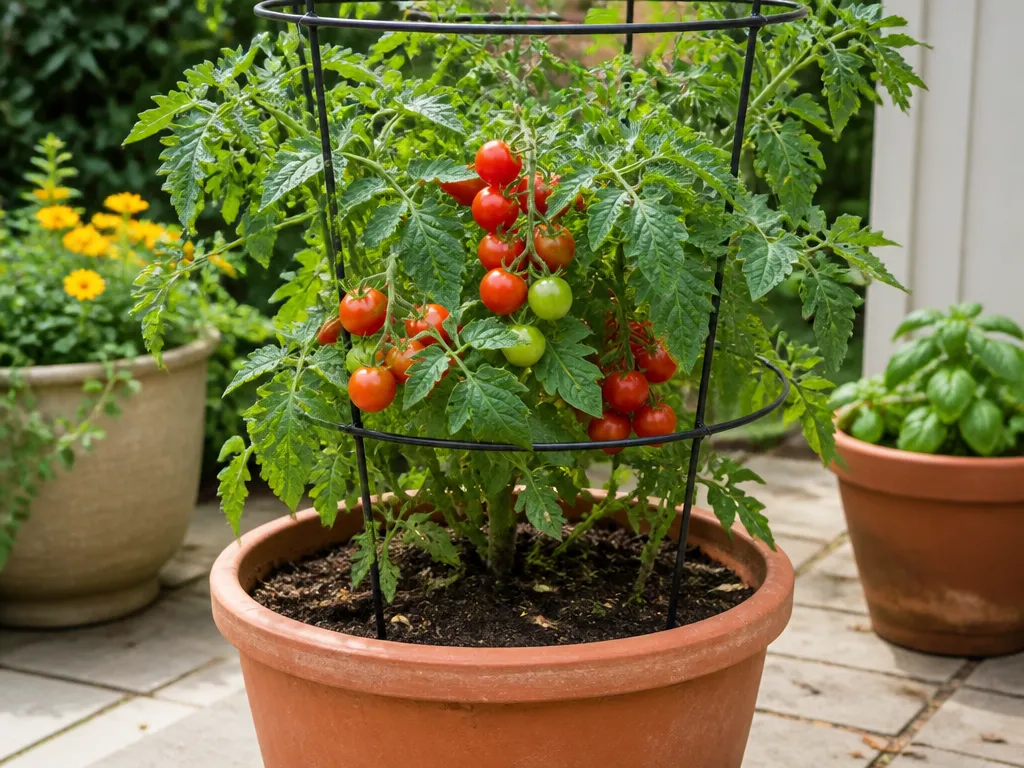
Install support structures at the moment of transplanting to avoid damaging the delicate root system later in the season. Container-grown tomatoes often become top-heavy as fruit sets, and a lack of proper bracing leads to broken branches or plants that tip over in high winds.
Check your supports weekly during the peak of summer. If you notice the plant leaning or the weight of the tomatoes pulling the cage down, add extra ties or adjust the stake to ensure the plant remains upright. Strong, vertical growth ensures the plant receives the required 6 to 8 hours of direct sunlight daily across all its leaves.
Watering And Feeding Schedules
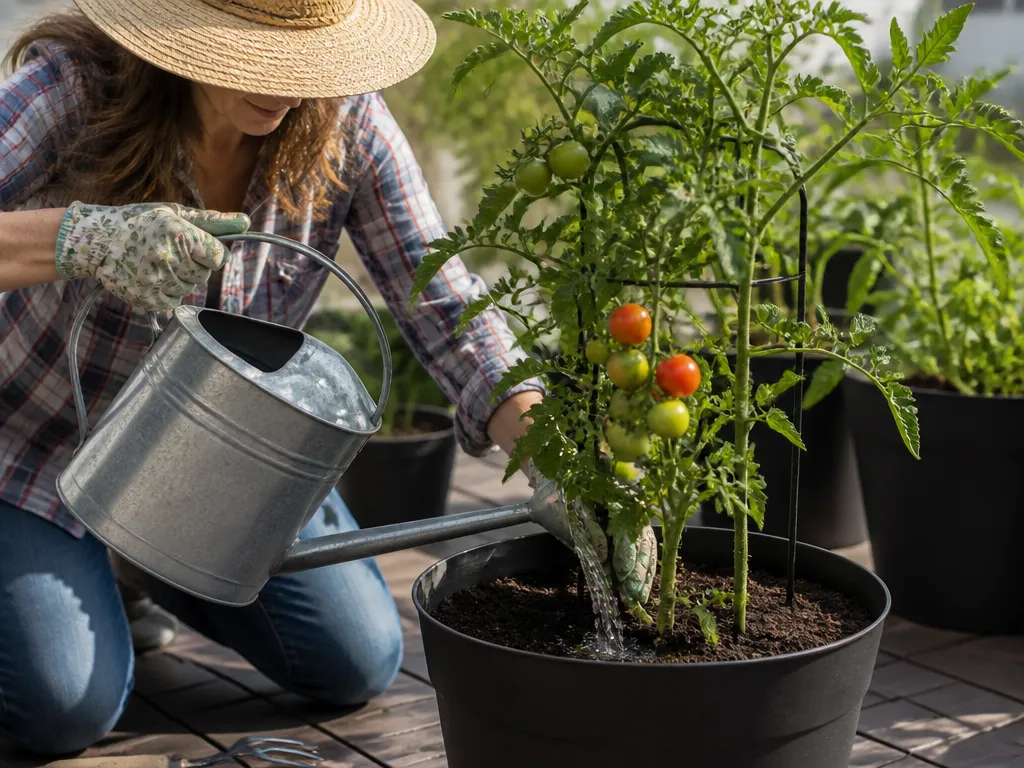
Container tomatoes need consistent moisture to prevent blossom end rot and fruit cracking. In USDA zones 7-9, peak summer heat often requires daily watering to maintain steady moisture levels.
Moisture Management
Inconsistent watering leads to calcium deficiencies in the fruit. This manifests as a black, leathery patch on the bottom of the tomato. Letting a pot dry out completely and then flooding it causes the skin to expand too quickly, resulting in a split tomato. Check the soil by inserting a finger 2 inches deep; if the soil feels dry at that depth, add water.
Nutrient Delivery
Nutrients leach out of potting mix every time you water. Potted plants cannot pull minerals from the earth like garden-bed plants do. Use an organic liquid fertilizer to maintain a soil pH of 6.0-6.8. Focus on phosphorus and potassium once the plant begins to flower.
| Growth Stage | Frequency | Nutrient Focus |
|---|---|---|
| Vegetative | Every 14 days | Nitrogen for leaf growth |
| Flowering | Every 10-14 days | Phosphorus for blooms |
| Fruiting | Every 7-10 days | Potassium for fruit quality |
In practice, liquid feeds are better than slow-release granules in pots. Liquid options allow you to adjust the nutrient mix based on the plant’s current needs.
Common Container Pests And Diseases
High-density container environments create a perfect storm for fungal issues and insect infestations. The confined root zones stress the plants, making them vulnerable to specific ailments that rarely appear in open ground gardens. You must monitor the leaves closely because early intervention saves the harvest before it is lost to rot or pests.
Seasonal Container Care Calendar
Growing tomatoes in pots requires strict timing to ensure roots establish before heat stress sets in and to maximize harvest before the first frost. You must move seedlings outdoors gradually and stop fertilizing once fruit begins to color.
Transplanting occurs only after the soil warms to 60 degrees Fahrenheit and all danger of frost has passed. Harden off seedlings by placing them outside for an hour the first day and increasing the time by an hour each day for a week. Use a container at least 5 gallons in size for determinate varieties and 10 gallons for indeterminate types to support vigorous root growth and prevent tipping over.
High temperatures demand a consistent moisture schedule, as dry soil causes blossom end rot. Water deeply every morning. Mulch the top of the soil with straw or wood chips to keep roots cool and retain moisture. You must check the soil daily during heat waves because containers dry out much faster than garden beds.
Harvest tomatoes when they are fully colored and slightly soft to the touch. Twist the fruit gently rather than pulling it to avoid damaging the plant. Once frost threatens, pull the plants and add the debris to the compost pile rather than the trash.
Companion Planting For Pots
Strategic plant placement in containers maximizes limited space while improving plant health through natural pest deterrence. Selecting the right neighbors prevents nutrient competition and physical overcrowding in restricted soil volumes.
The aromatic oils in basil mask the scent of the tomato plant, which confuses common garden pests like aphids and hornworms.
Companion Planting Reference Table
| Plant | Benefit | Spacing Requirement |
|---|---|---|
| Basil | Pest masking | 6 inches from tomato stem |
| Marigold | Repels nematodes | Edge of container |
| Nasturtium | Moisture retention | Container perimeter |
Container gardening limits the total root zone, so observe your plants closely for signs of nutrient deficiency. If the tomato plant appears stunted or yellow, the companion plant is likely competing for nitrogen. In such cases, remove the companion immediately to prioritize the health of the primary crop.
Quick Summary
Successful container gardening requires specific attention to vessel size and environmental needs to produce a healthy crop. You must provide at least five gallons of soil volume for each plant to ensure proper root development and space. These plants demand between six and eight hours of direct sunlight every day to thrive. Using a high quality, well draining potting mix is essential to avoid the compaction and disease risks associated with garden soil. Maintaining a soil pH between 6.0 and 6.8 helps prevent nutrient lockout while keeping the plant healthy throughout the season.
Management techniques differ based on whether you select determinate or indeterminate varieties for your patio. Determinate plants offer a concentrated harvest over four to six weeks, while indeterminate types require vertical support and pruning to yield fruit until the first frost. Regardless of variety, you should water at the base to keep foliage dry and apply liquid fertilizer every two weeks once fruit begins to form. Always wait until nighttime temperatures stay above 50 degrees Fahrenheit before moving your pots outdoors. The most important takeaway is consistent moisture management to prevent blossom end rot.
| Category | Requirement |
|---|---|
| Sunlight | 6-8 hours daily |
| Water | Keep soil evenly moist |
| Soil pH | 6.0 to 6.8 |
| Container Size | Minimum 5 gallons |
| Harvest Time | 60-90 days |
Frequently Asked Questions
When Is The Best Time To Plant Container Tomatoes?
Wait until the soil temperature is at least 60 degrees Fahrenheit and the danger of frost has completely passed. Planting too early in cold soil can stunt your plant’s growth for the entire season.
How Often Should I Water Tomatoes In Pots?
Container plants dry out much faster than garden beds, so you may need to water once or even twice daily during extreme heat. Always check that the top inch of soil feels dry before adding more.
Why Are My Tomato Leaves Turning Yellow Or Brown?
Yellowing lower leaves often signal a nitrogen deficiency or overwatering, while brown spots typically indicate fungal issues like early blight. To prevent disease, always avoid wetting the foliage when you water your plants.
How Do I Stop Pests Like Hornworms Organically?
The most effective organic method is to hand-pick the caterpillars and drop them into a bucket of soapy water. You can also use Bacillus thuringiensis (Bt), which is a natural bacteria that targets caterpillars without harming your beneficial insects.
How Big Should My Container Be For A Tomato Plant?
Determinate varieties need at least 5 gallons, while indeterminate varieties need 10 to 15 gallons of soil to allow for healthy root development. Using a pot that is too small will lead to stunted growth and much lower yields.